



What Is a Charter School Authorizer?
The charter bargain promises autonomy in exchange for accountability. Charter school authorizers are the mechanism that brings the promise of charter schools to life. A charter school authorizer is the entity responsible for reviewing and approving applications to open a new charter school. They also set academic and operational expectations and oversee the performance of charter schools in their portfolio. Authorizers determine whether a charter should be renewed or closed at the end of its contract based on expectations defined in the charter contract.
Authorizers play a critical role in maintaining quality in the charter sector. They ensure that charter schools are held accountable for student outcomes, financial stewardship, and legal compliance while providing charter schools the freedom and flexibility to innovate.
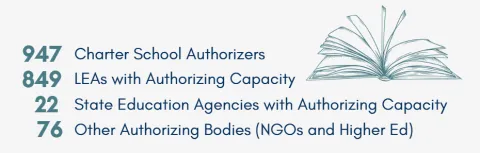
Entities empowered to authorize charter schools vary by state law. Nearly 90% of authorizers nationwide are local school districts, but they can also include:
- SEAs
- Independent chartering boards
- Institutes of higher education
- Non-Educational Government Entity (i.e., mayors and municipalities)
- Nonprofit organizations
Groups interested in opening a charter school should review their state law to determine the entities that can authorize within their locality. Each authorizer has their own application and processes for new charter schools that should be reviewed carefully to determine requirements and next steps. Potential charter school applicants should also consider reaching out to their state Charter School Support Organization (CSSO) for assistance. To learn more about a particular state's charter sector, visit CCSE's state resource page.
Strong authorizing is essential to a high-quality charter school sector. To learn more about charter school authorizing, please visit the following resources.